|
Tao Te Ching
THE TAOISM OF LAO TZU
|
Taoist Philosophy and ReligionTao Chia and Tao ChiaoIn its original form, Taoism is not a religion. Gods and the afterlife are vague, almost non-existent. It is all about here and now: how to live a pleasant life, without causing unnecessary commotion or distress. Tao, the Way, is a kind of natural law behind all of creation. The one who can harmonize with it is sure to find bliss.
Taoist philosophyTao ChiaBasically, there are two forms of Taoism: the philosophy and the religion. The former, which is the oldest, is called Tao chia (also spelled Dao jia), and the latter Tao chiao (Dao jiao). When westerners talk about Taoism as a religion, they refer to Tao chiao — often unknowingly. Tao chia has little to do with gods, the afterlife, and such matters. It is a philosophy for the here and now.
On this website you find both these major works of Taoist philosophy. See the menu on the left.
Taoist religionTao Chiao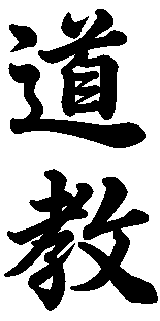 Taoist religion, Tao chiao, which is not treated on this website, consisted of a number of rituals and traditions by which to prolong one's life, reach spiritual insight, and come to peace with existence. It is a very rich and complex tradition of mysticism and magical rites that emerged during the later part of the Han dynasty, around the beginning of the Christian Era.
They referred to Tao Te Ching and other Taoist sources, but did so quite liberally, with interpretations that sometimes got very far from the texts they leaned on. For example, their ideas about longevity were based on Tao Te Ching's chapter 33, which ends with a line that they interpreted: "The one who dies without perishing gets a long life." Findings of the 1970s in Mawangdui show that the accurate reading of that line should be: "The one who dies without being forgotten gets a long life." This form of longevity — in the memory of others — is an old wisdom also found in many other cultures. Tao Te ching actually expresses no belief in a significantly prolonged life, and certainly not an eternal one. So, I dare say that the major sources of Taoism agree that Taoism is a philosophy, and not much of a religion.
About CookiesMy Other Websites:I Ching OnlineThe 64 hexagrams of the Chinese classic I Ching and what they mean in divination. Try it online for free.
Qi Energy ExercisesThe ancient Chinese life energy qi (chi) explained, with simple instructions on how to exercise it.
Life EnergyThe many ancient and modern life force beliefs all over the world explained and compared.
Taoismen på svenska
Other Books by Stefan StenuddClick the image to see the book at Amazon (paid link).
The Greek philosophers and what they thought about cosmology, myth, and the gods. |
 Tao Te Ching
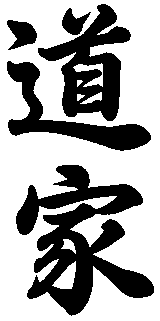 The two major sources to Tao chia, the Taoist philosophy, are Lao Tzu and Chuang Tzu, who both lived several centuries BC. Lao Tzu was the legendary writer of Tao Te Ching, the foremost classic of Taoism. Chuang Tzu has left behind a book named after him, with 33 chapters (whereof at least the first nine are regarded as of his making).
 Tao Quotes
 Fake Lao Tzu Quotes
 Cosmos of the Ancients
 Qi — Increase Your Life Energy
 Aikido Principles
 Life Energy Encyclopedia
 Archetypes of Mythology
 Stefan Stenudd