|
Tao Te Ching
THE TAOISM OF LAO TZU
|
Chuang Tzu 15 The Taoist Text, Chapter 15
Ingrained Ideas.1. Ingrained ideas and a high estimate of their own conduct; leaving the world, and pursuing uncommon ways; talking loftily and in resentful disparagement of others;- all this is simply symptomatic of arrogance. This is what scholars who betake themselves to the hills and valleys, who are always blaming the world, and who stand aloof like withered trees, or throw themselves into deep pools, are fond of.
Discoursing of benevolence, righteousness, loyalty, and good faith; being humble and frugal, self-forgetful and courteous;- all this is simply symptomatic of (self-)cultivation. This is what scholars who wish to tranquillise the world, teachers and instructors, men who pursue their studies at home and abroad, are fond of. Discoursing of their great merit and making a great name for themselves; insisting on the ceremonies between ruler and minister; and rectifying the relations between high and low;- all this shows their one object to be the promotion of government. This is what officers of the court, men who honour their lord and would strengthen the state and who would do their utmost to incorporate other states with their own, are fond of. Resorting to marshes and lakes; dwelling in solitary places; occupying themselves with angling and living at ease;- all this shows their one object to be to do nothing. This is what gentlemen of the rivers and seas, men who avoid the society of the world and desire to live at leisure, are fond of. Blowing and breathing with open mouth; inhaling and exhaling the breath; expelling the old breath and taking in new; passing their time like the (dormant) bear, and stretching and twisting (the neck) like a bird;- all this simply shows the desire for longevity. This is what the scholars who manipulate their breath, and the men who nourish the body and wish to live as long as Pang Tsû, are fond of. As to those who have a lofty character without any ingrained ideas; who pursue the path of self-cultivation without benevolence and righteousness; who succeed in government without great services or fame; who enjoy their ease without resorting to the rivers and seas; who attain to longevity without the management (of the breath); who forget all things and yet possess all things; whose placidity is unlimited, while all things to be valued attend them:- such men pursue the way of heaven and earth, and display the characteristics of the sages. Hence it is said, "Placidity, indifference, silence, quietude, absolute vacancy, and non-action:- these are the qualities which maintain the level of heaven and earth and are the substance of the Tâo and its characteristics."
Therefore it is (also) said, "The life of the sage is (like) the action of Heaven; and his death is the transformation common to (all) things. In his stillness his virtue is the same as that of the Yin, and in movement his diffusiveness is like that of the Yang. He does not take the initiative in producing either happiness or calamity. He responds to the influence acting on him, and moves as he feels the pressure. He rises to act only when he is obliged to do so. He discards wisdom and the memories of the past; he follows the lines of his Heaven (-given nature); and therefore he suffers no calamity from Heaven, no involvement from things, no blame from men, and no reproof from the spirits of the dead. His life seems to float along; his death seems to be a resting. He does not indulge any anxious doubts; he does not lay plans beforehand. His light is without display; his good faith is without previous arrangement. His sleep is untroubled by dreams; his waking is followed by no sorrows. His spirit is guileless and pure; his soul is not subject to weariness. Vacant and without self-assertion, placid and indifferent, he agrees with the virtue of Heaven." Therefore it is said (further), "Sadness and pleasure show a depraving element in the virtue (of those who feel them); joy and anger show some error in their course; love and hatred show a failure of their virtue. Hence for the mind to be free from sorrow and pleasure is the perfection of virtue; to be of one mind that does not change is the perfection of quietude; to be conscious of no opposition is the perfection of vacancy; to have no intercourse with (external) things is the perfection of indifference; and to have no rebellious dissatisfactions is the perfection of purity."
There is the vulgar saying, "The multitude of men consider gain to be the most important thing; pure scholars, fame; those who are wise and able value their ambition; the sage prizes essential purity." Therefore simplicity is the denomination of that in which there is no admixture; purity of that in which the spirit is not impaired. It is he who can embody simplicity and purity whom we call the True Man. 
Chuang Tzu
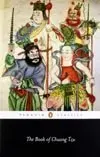 The Book of Chuang TzuA modern translation of Chuang Tzu, by Martin Palmer and Elizabeth Breuilly.See the book at Amazon
About CookiesMy Other Websites:I Ching OnlineThe 64 hexagrams of the Chinese classic I Ching and what they mean in divination. Try it online for free.
Qi Energy ExercisesThe ancient Chinese life energy qi (chi) explained, with simple instructions on how to exercise it.
Life EnergyThe many ancient and modern life force beliefs all over the world explained and compared.
Taoismen på svenska
Other Books by Stefan StenuddClick the image to see the book at Amazon (paid link).
The Greek philosophers and what they thought about cosmology, myth, and the gods. |
 Tao Te Ching
 Tao Quotes
 Fake Lao Tzu Quotes
 Cosmos of the Ancients
 Qi — Increase Your Life Energy
 Aikido Principles
 Life Energy Encyclopedia
 Archetypes of Mythology
 Stefan Stenudd